
Your Holiday Just Got Hijacked - When Booking.com Knows You Too Well
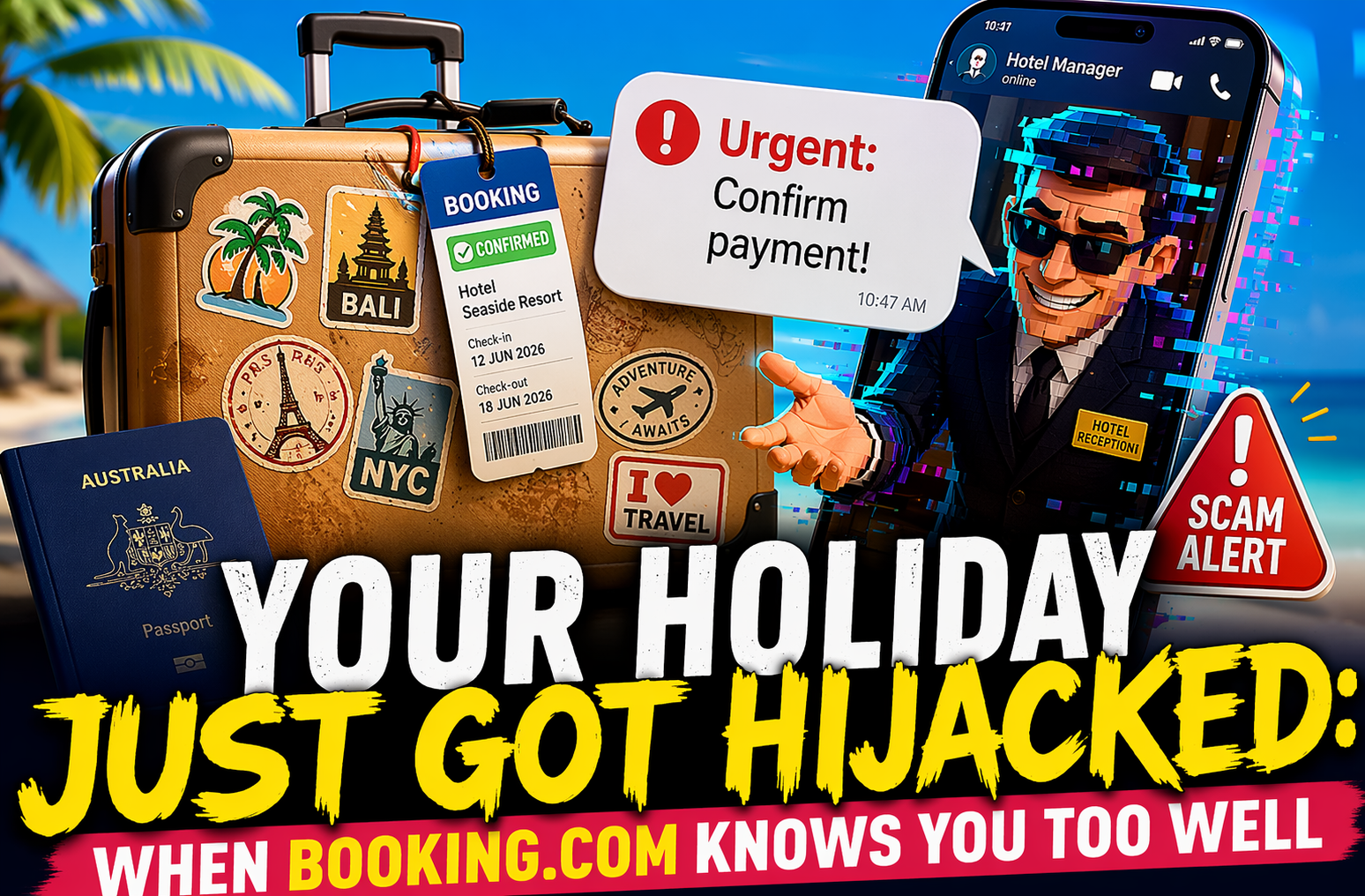
The Funny Summary
You booked a relaxing getaway, and accidentally RSVP’d to a scammer’s group chat. Turns out cyber crooks now know your hotel, your dates, and possibly more about your trip than your partner; so convincing scams are showing up pretending to be your hotel asking for “just one more quick payment” before your margarita even hits the table.
The Top (5) Takeaways
Real booking data is the new goldmine
Travel reservation info (names, dates, hotels) is highly valuable and is now actively targeted by cybercriminals.Scams are highly personalised and convincing
Victims report messages that include legitimate booking references and details, making them almost indistinguishable from real hotel communication.Phishing is hitting travellers post-booking
Dozens of travellers reported fake WhatsApp messages and emails shortly after making bookings.Urgency is the main weapon
Scammers pressure victims with threats like cancellation or penalties if payment details aren’t “confirmed quickly.”This is fallout from a broader data exposure issue
Concerns stem from a prior Booking.com data breach where unauthorised parties accessed reservation data, enabling targeted scams.
The Long-From Article
Reference:
Australian Broadcasting Corporation. (2026, June 6). More Australians targeted by Booking.com scams, with travellers lucrative targets for criminals. https://www.abc.net.au/news/2026-06-06/booking-com-scammers-target-travel-reservations/106759168